Part of special education's federal work is moving to HHS, and it's the part you'll never see. HHS is the U.S. Department of Health and Human Services. Under a June 2026 agreement, it helps run the federal grants and the checks on how states follow the law. Your child's IEP, the school's written plan for special education, doesn't move. The law behind it, the meetings, the deadlines and your rights stay the same.
You may have read that the Education Department is being dismantled. As of November 2026, it's open and still holds the legal duty for special education. Congress created the department, so closing it would take a new law.
What happens to my child's IEP?
Your child's IEP stays exactly as it is. It's still the plan your school district has to follow, with the same goals, services and yearly meeting.
The right to an IEP comes from IDEA, the federal special education law. Only Congress can change that law, and an agreement between two departments can't. The Education Department's special education office said so in its September 2026 update. The rights in IDEA "cannot and will not change through our partnership," it wrote. The federal rules for IEPs haven't changed since 2017, either.
California backs that up with its own law. Its Education Code gives every child who needs special education the right to a free education that fits their needs. It also sets the deadlines your school has to meet. In California, an IEP can last until age 22 for a student who hasn't graduated with a regular diploma.
Which parts move to HHS, and when?
The parts moving to HHS sit between Washington and the states. HHS now helps run the federal grants, check how states follow the law and give each state its yearly rating. The move covers every age the law serves, from Early Start for babies through the last year of school. The Education Department keeps the final say, and its own staff, on loan to HHS, do most of the work.
The agreement took effect when it was signed, in June 2026. In September, the Education Department's special education staff started working out of an HHS building, still as its employees. This school year's grants went out through the Education Department's own system. Next school year's, expected around July 2027, go through HHS's.
If your child is under 3, the move reaches Early Start. That's the program for babies and toddlers run by Regional Centers, California's local agencies for people with developmental disabilities. Part of Early Start's money comes from one of these federal grants. The Education Department says parents keep their say in an Early Start plan, the same as in an IEP.
| Part of special education | Who handles it, as of November 2026 |
|---|---|
| Your child's IEP, its services and its meetings | Your school district, same as before |
| Deadlines for testing and IEP meetings | California law, unchanged |
| Complaints when a school doesn't follow an IEP | The California Department of Education, same as before |
| Checking how states follow the law | Education Department staff, working at HHS since September 2026 |
| This school year's federal grants | The Education Department's grant system |
| Next school year's federal grants | HHS's grant system, expected around July 2027 |
| Regional Center services for ages 3 and up | Your Regional Center, under California law. Not part of the move. |
Does anything change at school this year?
Nothing changes at your child's school this year. The federal special education money for 2026-27 already reached states, on July 1 and October 1, 2026.
Two things are worth watching:
- December 11, 2026. Current federal funding runs out unless Congress acts. Congress still has to pass next year's budget, which sets federal special education money for 2027-28.
- A Senate bill. S. 5046 would block the special education move and three others. A Senate committee approved it in July 2026. As of November 2026, it has waited for a full Senate vote since August 4.
How do I keep my child's IEP on track?
Do what protects an IEP in any year: save copies, and put every request in writing. Waiting for the news to settle before asking for an IEP meeting? The deadlines below work the same today.
- Save the current IEP, the last progress report and any emails about services in one folder.
- Ask for things in writing, with the date. California's deadlines count from the day the school gets your written request.
- Know the deadlines. Ask for testing, and the school has 15 days to send a plan for it. Sign that plan, and the IEP meeting comes within 60 days. Ask in writing for a meeting to review the IEP, and it has to happen within 30 days. School breaks of more than five school days don't count.
Those deadlines are in California law, and an agreement in Washington doesn't pause them. If a delay ever gets blamed on the federal changes, ask for the reason in writing.
Your written request starts the clock.
Will Regional Center services be next?
Regional Center services for ages 3 and up aren't part of this move, and California gave the Regional Centers more money this year. A Regional Center is your local agency for people with developmental disabilities, like autism, at any age. Its services come from a California law, the Lanterman Act, and the state budget pays for them. After age 3, none of that money comes from the federal special education grants.
That budget grew. California's 2026-27 budget for developmental services, which pays the Regional Centers, is $21.6 billion. That's 16 percent more than last year, and the state's budget analysts found no major cuts in it. Some of that money is federal Medicaid, which is a separate story. Our piece on Medicaid cuts and Regional Center services covers it.
When the IEP ends, the Regional Center doesn't. Its services have no upper age limit.
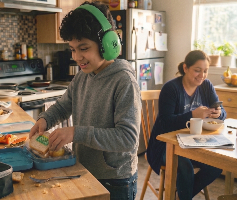
Your Regional Center's plan for your child is the IPP, short for Individual Program Plan. It covers help with the skills that make life at home work: getting dressed, showering, making a snack, getting around town. Our guide to the IEP and the IPP shows which plan covers what.
Help at home doesn't have to wait for the news to settle either. Ask your Regional Center for an IPP review, and it has 30 days to hold one.
Bring one more ask to that review: someone to teach those skills at home. On our team, each professional is a caring, master's-level clinician with 9.3 years of experience on average. We'd send one who has already helped people learn the same skills. The Regional Center pays all of it, so your family's cost is $0. What's the hardest part of your child's day? Start there to see if adaptive skills training is the right help.
Is the 504 plan being eliminated?
No. Section 504, the civil rights law behind 504 plans, still stands. It's the law that gets a child changes at school, such as a seat near the teacher or breaks during class.
The court case in the news, Texas v. Kennedy, ended in September 2026 by striking parts of an HHS rule about community living. School 504 rules haven't changed as of November 2026. Our comparison of a 504 plan and an IEP shows which one fits your child.
Questions parents actually ask
Will HHS get my child's records?
No. Your child's IEP and school records are kept by your school district. The Education Department's special education office says it doesn't keep individual children's records, so there are none to move.
Will a government shutdown stop my child's IEP services?
No. Your school district runs the IEP, and a federal shutdown doesn't close public schools or pause what the law requires of them. This year's federal money reached states before the December 11 deadline.
Will my child's school lose special education money?
Not from this move. Congress sets how much each state gets, and the move only changes which department sends it. California's 2026-27 budget also added $2.4 billion for special education.
Do I need to sign anything because of the move?
No. The agreement is between two federal departments, so no new form, signature or meeting comes with it. Keep your copies and keep asking in writing, the same as any year.