An IEP covers your child's school day. An IPP covers life outside school: mornings, evenings, weekends, summers, and the skills your child needs at home and around town. So help at home comes through the IPP. Ask the school for what your child needs to learn. Ask your Regional Center for help with getting dressed, using the toilet or making a meal.
The IEP (Individualized Education Program) is your school district's plan. The IPP (Individual Program Plan) is your Regional Center's plan. A Regional Center is the California agency that serves people with developmental disabilities, like autism.
Most parents know the IEP well. It gets the meetings, the advocates and the arguments. The IPP gets far less attention. Yet it's the plan that can send someone to your home to teach the routines you've been running alone.
| IEP | IPP | |
|---|---|---|
| Whose plan | Your school district's | Your Regional Center's |
| Who you work with | Your child's school team | Your Regional Center service coordinator |
| What it's for | Learning at school | Life at home and out in the community |
| What it can get your child | An aide, speech therapy, special classes, the school bus | Someone to teach everyday skills at home, respite (a break for you), camps, outings |
| When it helps | The school day | Mornings, evenings, weekends and summers |
| Ages | 3 to 22 | 3 and up, with no upper limit |
| Asking for a change | Any time, in writing; the school meets within 30 days | Any time; your Regional Center meets within 30 days |
What can the IPP get your child that the IEP can't?
Help at home is the big one. The school's job ends when your child walks out the door in the afternoon. The IPP picks up from there, with help the school doesn't give.
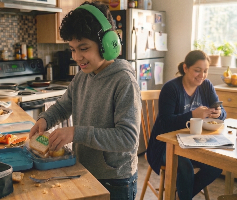
- Everyday skills at home. A professional comes to your home and teaches the routines. Getting dressed, using the toilet, showering, cooking, handling money, getting around town. The Regional Center calls this adaptive skills training.
- Breaks for you. Respite pays a trained worker to watch your child while you rest or run errands.
- Camps and outings. Summer camp and social outings count as life in the community.
- Help after school ends. The IPP keeps going past 22, when the IEP stops.
A teacher can't stand in your hallway on a school morning.
The same skill can land in both plans. Using the toilet at school is an IEP goal, because your child needs it to stay in class. Using the toilet at home is an IPP goal, because your child needs it to live in your house.
So tell each side how the skill gets in the way in its own place. Use home words at the school, and you'll often hear that it's a Regional Center service. Use school words at the Regional Center, and you'll hear the reverse.
For a lot of the families we talk to, the child's biggest goal sits in neither plan. It came up at both meetings. The IEP notes say the parent will check with the Regional Center, and the IPP never mentions it.
Which plan do you ask for what?
Ask the school for anything your child needs to learn during the school day. Ask your Regional Center for the skills your child uses at home and in town.
| What your child needs | Where to ask |
|---|---|
| An aide in class | The school, in the IEP |
| Speech or occupational therapy for school goals | The school, in the IEP |
| Help in the school bathroom | The school, in the IEP |
| Tutoring and homework help | The school, in the IEP |
| The bus to school | The school, in the IEP |
| Summer school, called extended school year | The school, in the IEP |
| Learning to use the toilet, dress or shower at home | Your Regional Center, in the IPP |
| Learning to cook, handle money or take the bus | Your Regional Center, in the IPP |
| A break for you, called respite | Your Regional Center, in the IPP |
| Summer camp and social outings | Your Regional Center, in the IPP |
| Therapy a doctor orders | Your health plan or Medi-Cal, first |
What if the school and the Regional Center send you to each other?
Get the school's answer in writing. That one piece of paper ends a lot of the back and forth.
The back and forth starts with a rule. Before your Regional Center pays for anything, it has to check what the school and your health plan cover. So your service coordinator, the person at the Regional Center who manages your child's plan, asks what the school is doing. Meanwhile the school says "that's a Regional Center thing" across the table, and nobody writes it down.
When a school turns down a request, federal law says it must tell you why, in writing. That letter is called prior written notice. Ask for it like this: "If the district won't provide this, please put that in prior written notice with the reason."
Then email the letter to your service coordinator, with three things:
- The skill, in home words: using the toilet at home without help, or getting dressed on a school morning.
- The service you want, by name, like adaptive skills training.
- A request to add the goal to the IPP.
The goal comes first, because Regional Center help follows the goals written in the IPP. Our guide to what an IPP is and how it works shows how to get one written in.
Can your child have both an IEP and an IPP?
Yes. A child can have an IEP and an IPP at the same time, and plenty of Regional Center families do. The two plans cover different hours of the same child's day.
Bring a copy of the IEP to your IPP meeting. It shows the Regional Center what the school already covers, so nothing falls between the two plans.
The two plans end differently, too. The IEP stops when your child leaves school, at 22 at the latest. The IPP keeps going at every age. So the teen years are a good time to move skills like cooking, handling money and getting around town into the IPP.
How to choose where to ask
Start with where and when the skill happens.
- During the school day. Ask the school, through the IEP.
- At home, after school, on weekends or in summer. Ask your Regional Center, through the IPP.
- Medical, like therapy a doctor orders. Ask your health plan or Medi-Cal first.
- In both places. Ask both, each in its own words.
- No Regional Center yet. Ask the school anyway, because the IEP doesn't depend on the Regional Center.
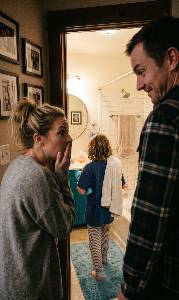
The second line is the one that comes back every day. It happens at 7 a.m. and at bedtime, in your bathroom and your kitchen, and no teacher is there for any of it.
That's the work we come for, in the rooms where the routine happens. Picture a caring professional with a master's degree and 9.3 years of experience on average. We'd match them to your child because they've already helped people stuck on that same routine. Through your Regional Center, the cost to your family is $0. See whether your child's IPP should include adaptive skills training.
One of the biggest misconceptions parents have is that asking for adaptive skills training will cost them IHSS or respite hours. It won't. IHSS (In-Home Supportive Services) is the county program that pays for care at home. The state tells counties to set IHSS hours as if the Regional Center paid for nothing at all. Adding adaptive skills training won't lower your respite either.
Questions parents actually ask
Do I have to wait for the next IPP meeting to ask for something new?
No. Email your service coordinator any time. Your Regional Center has 30 days to meet with you about it.
If we add adaptive skills training, do we lose IHSS or respite hours?
No. Adding it won't lower your IHSS hours or your respite. Counties have to leave Regional Center help out when they set IHSS. The state's letter says so.
Isn't the IPP just paperwork?
Only if it's left empty. The Regional Center works from the goals written in it, so a need that isn't there usually gets no help.
Can the Regional Center help with homework or tutoring?
Usually not. Schoolwork is the school's job, so ask for help with reading or math in the IEP.
What if my child doesn't have a Regional Center yet?
Keep asking the school, because the IEP doesn't depend on the Regional Center. Regional Center help starts with an eligibility check, which is a separate step.
Who helps once my child turns 22?
Your Regional Center, through the IPP. The IEP ends when school does, but the IPP has no upper age limit. Adult skills like cooking and getting to work move there.