Every new IPP picks from the same 12 life areas. The IPP, or Individual Program Plan, is the Regional Center plan that sets out a person's goals and who helps with each. Below are sample goals for every area, for ages 3 to 13, 14 to 22 and adults, starting at home and moving outward. Each one says what [Name] wants, what [Name] will do, how it's measured and by when.
[Name] is how DDS, the state's Department of Developmental Services, writes the person's name into its template questions. Put the real name in, or write "I will..." if the person wants a first-person plan, which DDS allows. Each area ends with a sample answer to its last question, "What needs to be done?", saying who does what. For one goal worked through all five questions, jump to the lunch example.
1. Supports at home
Dressing, the toilet, bathing, meals and chores all belong in Supports at Home. It's also where DDS's guide asks if the person wants "training or supports provided in home."
- Ages 3 to 13. [Name] wants to pick their own clothes. Within 6 months, [Name] will put on pants, a shirt and shoes alone on 4 of 5 school mornings, with at most one reminder.
- Ages 14 to 22. [Name] wants privacy in the bathroom. Within 6 months, [Name] will shower 5 days a week with a picture checklist and no adult in the room.
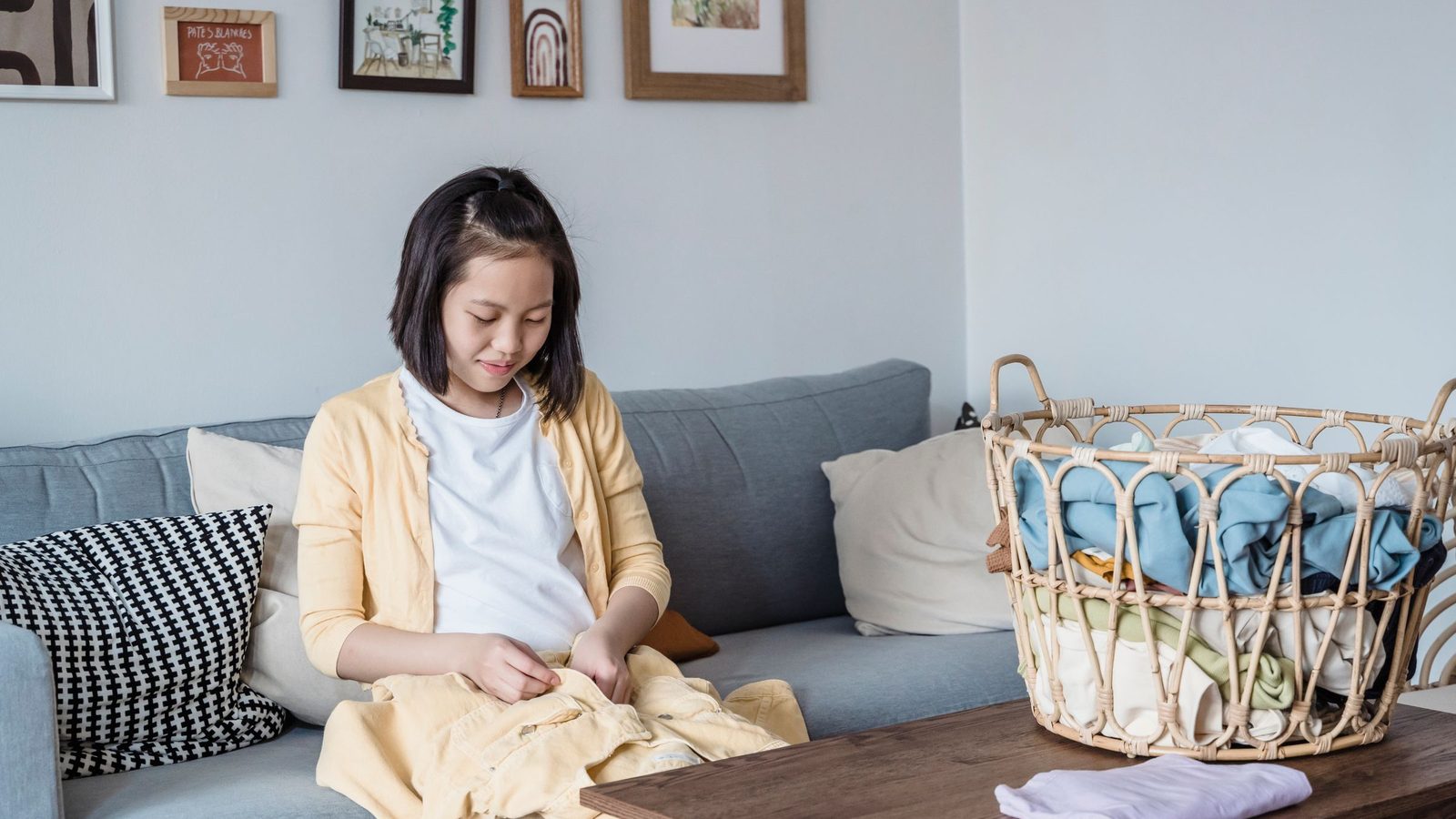
- Adults. [Name] wants their favorite hoodie clean by the weekend. Within 6 months, [Name] will wash, dry and fold their own laundry every week, using a checklist taped to the washer.
What needs to be done? Adaptive skills training, the Regional Center service that teaches everyday skills at home and in the community. The provider assesses [Name], then teaches one routine at a time. Parents use the same steps between sessions. The service coordinator, [Name]'s contact at the Regional Center, requests the assessment and names the provider on the signature form.
2. Home life/housing
Home Life/Housing asks whether home fits [Name]. It takes in who lives there, [Name]'s part in the household, their privacy and where they'd like to live next. DDS's guide adds a question for every age. Which skills would [Name] like to "learn now to get them closer to their future goals"?
- Ages 3 to 13. [Name] wants a job at home like everyone else. Within 3 months, [Name] will set the table for dinner, 5 nights a week.
- Ages 14 to 22. [Name] loves the family dog. Within 3 months, [Name] will feed the dog and fill its water bowl every morning with no reminders.
- Adults. [Name] wants to share an apartment with a friend within 2 years. Within a year, [Name] will plan, shop for and cook 3 dinners a week.
What needs to be done? Family hands over the table setting and the dog's breakfast, and doesn't take them back. For the adult goal, the adaptive skills training provider teaches cooking at home while [Name] still lives with family. After the move, IHSS, the county program that pays for care at home, can cover housework and meals. The service coordinator helps [Name] apply.
3. Safety considerations
Safety Considerations is where DDS wants each risk written down, with the plan to lower it. That goes under what is currently happening, what is important for [Name] and what needs to be done.
- Ages 3 to 13. [Name] wants to walk to the park. Within 6 months, [Name] will stop at the curb and wait for an adult to say "go" on 9 of 10 street crossings.
- Ages 14 to 22. [Name] wants to walk the mall with friends. Within 6 months, if separated, [Name] will show a store clerk an ID card with a parent's number, on 3 of 3 practice runs.
- Adults. [Name] wants to stay home alone for an afternoon. Within 6 months, [Name] will open the door only for people on their list, 5 practice visits in a row.
What needs to be done? The adaptive skills training provider practices each skill where it happens: the corner, the mall, the front door. Family keeps supervision at the level the plan sets until each skill holds. The provider reports progress before the next review.
4. Healthcare/wellness
Current medicines get reviewed in Healthcare/Wellness, DDS says, with any side effects and the date of the last review. Sleep, eating, exercise and doctor's visits go here too.
- Ages 3 to 13. [Name] wants to sleep in their own room. Within 3 months, [Name] will fall asleep in their own bed by 9 p.m., 5 nights a week.
- Ages 14 to 22. [Name] likes walking with a friend. Within 3 months, [Name] will walk with that friend for 20 minutes, 3 times a week.
- Adults. [Name] wants to handle their own checkups. Within 6 months, [Name] will book their own doctor's visit by phone, using a saved script, 2 times in a row.
What needs to be done? The family takes the sleep trouble to the doctor first, through Medi-Cal or their health plan, to rule out a medical cause. Then the adaptive skills training provider builds the bedtime steps at home. For the adult goal, the provider practices the phone call. The friend joins the walks.
5. Personal/emotional growth
DDS's guide suggests opening Personal/Emotional Growth with one question: what makes a good day, and what makes a bad one?
- Ages 3 to 13. [Name] wants to eat lunch with classmates. Within 6 months, [Name] will use a break card to step out of a loud lunchroom and come back, 4 times out of 5.
- Ages 14 to 22. [Name] wants fewer bad days at school. Within 3 months, [Name] will tell the school counselor one thing that went wrong and one that would help, each week.
- Adults. [Name] wants to worry less before work. Within 3 months, [Name] will use their calming plan and get to work on time on 9 of 10 shifts.
What needs to be done? The family asks the IEP team to add the break card and a weekly counselor check-in. The IEP is the school's special education plan. Parents use the same card at home. For the adult goal, a counselor through Medi-Cal or county mental health helps [Name] build the calming plan.
6. Relationships
Plans for aging caregivers go in Relationships, DDS says, when a parent or grandparent plays a big part in [Name]'s life. So do the people [Name] feels close to and wants more time with.
- Ages 3 to 13. [Name] wants a friend to play with. Within 6 months, [Name] will play a 10-minute board game with a friend or relative, taking turns, twice a week.
- Ages 14 to 22. [Name] wants a friend outside school. Within 6 months, [Name] will text a classmate, make a plan and meet up once a month.
- Adults. [Name] misses relatives across town. Within 3 months, [Name] will start a video call with them every Sunday.
What needs to be done? Natural supports, meaning the unpaid help of family and friends. A parent sets up the game nights and invites a friend or relative. Family helps [Name] save classmates' numbers and drives to meetups. A relative adds the Sunday call to [Name]'s phone.
7. Community participation
Community Participation is the fun part of the plan: hobbies, classes, favorite places and volunteering. DDS's guide even asks what would help the person "learn how to get involved in their communities."
- Ages 3 to 13. [Name] loves the water. Within 6 months, [Name] will stay with a weekly swim class for the full 30 minutes, 4 weeks in a row.
- Ages 14 to 22. [Name] wants to eat out with friends. Within 6 months, [Name] will order and pay at a fast-food counter alone, 3 visits in a row.
- Adults. [Name] wants to give back. Within 6 months, [Name] will volunteer 2 hours a week at a food bank, checking in on their own.
What needs to be done? A parent signs [Name] up for a swim class through the city's parks and recreation program. The adaptive skills training provider teaches ordering and paying at the counter itself. The food bank's volunteer lead shows [Name] how to check in.
8. Transportation/getting around
DDS suggests one question for Transportation/Getting Around: has the person "had any travel training"? The section covers every way [Name] gets around, from rides with family to the city bus.
- Ages 3 to 13. [Name] wants to buckle up like the grown-ups. Within 3 months, [Name] will buckle their own seat belt and stay buckled the whole ride to school, every school day.
- Ages 14 to 22. [Name] wants to get to the mall without a parent. Within 6 months, [Name] will ride the city bus there and back alone, 3 trips in a row.
- Adults. [Name] wants to get to work without a family ride. Within 6 months, [Name] will book their own paratransit ride a day ahead for every trip to work, 4 weeks in a row.
What needs to be done? The adaptive skills training provider rides the route with [Name] at first, then steps back a little at a time. A parent checks the buckle at the start of each ride. For the adult goal, the service coordinator helps [Name] apply for paratransit. That's the ride service for people with disabilities who can't use the bus alone.
9. Education/learning
School and the IEP go in Education/Learning, and so does learning outside school, like a class or a new hobby. Skills the school is responsible for stay in the IEP, and the IPP names them so both plans point the same way.
- Ages 3 to 13. [Name] wants to get around class on their own. By the end of the school year, [Name] will follow a picture schedule between class activities with no adult alongside, 4 days of 5.
- Ages 14 to 22. [Name] wants to try community college. Before leaving high school, [Name] will visit the college's disability services office and sign up for one class.
- Adults. [Name] wants to learn to draw. Within 6 months, [Name] will sign up for an adult school art class and go to 8 of the 10 sessions.
What needs to be done? The family asks the IEP team to add the picture schedule. The college visit goes in the IEP's transition plan, the school's plan for life after high school. For the adult goal, family helps with sign-up and rides.
10. Employment
From age 16, DDS requires coordinators to explain the state's Employment First policy at the IPP meeting. Under it, a regular job at regular pay comes first. Employment also covers how [Name] spends the day if work isn't the goal.
- Ages 3 to 13. Usually no goal yet. DDS's family guide for these ages asks only "What does your child want to be when they grow up?"
- Ages 14 to 22. [Name] wants to work with animals. Before leaving high school, [Name] will finish a 3-month work experience at an animal shelter, 4 hours a week.
- Adults. [Name] wants their own paycheck. Within a year, [Name] will get a paid job of 10 to 15 hours a week, at a place [Name] chooses.
What needs to be done? The family and school add the shelter placement to the IEP's transition plan. [Name] signs up for the Department of Rehabilitation's Student Services, for students 16 through 21. For the adult goal, the service coordinator refers [Name] to the Department of Rehabilitation for help finding the job.
11. Income/finances
For Income/Finances, think benefits, wages and everyday money. DDS's guide names the skills: "identifying coins and bills, using a debit card to make purchases, budgeting funds, or contributing to savings."
- Ages 3 to 13. [Name] wants to buy their own snack. Within 6 months, [Name] will pay for a snack with a $5 bill and wait for the change, 3 trips in a row.
- Ages 14 to 22. [Name] wants to buy their own games. Within 6 months, [Name] will pay with a debit card and check the receipt, 4 purchases in a row.
- Adults. [Name] wants a phone that never gets cut off. Within 6 months, [Name] will pay the phone bill online by the due date, using a checklist, 3 months in a row.
What needs to be done? The adaptive skills training provider teaches with real money at the real store, the way DDS's family guides suggest. A parent hands over the money or card on errands and steps back. The service coordinator notes who manages [Name]'s SSI, the monthly disability check from Social Security.
12. Choice/advocacy
Choice/Advocacy is about decisions: the ones [Name] makes alone, the ones they want help with, and speaking up. For children, DDS's family guide suggests "learning a chore, or choosing clothes, learning to express and set personal boundaries."
- Ages 3 to 13. [Name] wants a say in what to wear and eat. Within 3 months, [Name] will choose between two snacks or two shirts each day, by pointing, saying it or picking a picture.
- Ages 14 to 22. [Name] wants a say in the next plan. Before the next IPP meeting, [Name] will fill in the "Important To" page of DDS's workbook and share it there.
- Adults. [Name] wants to run their own meeting. Within a year, [Name] will lead the part of their IPP meeting that covers their goals, using notes they wrote.
What needs to be done? A parent offers two real choices a day. The service coordinator sends DDS's free workbook, from its IPP page, before the meeting. For the adult goal, someone [Name] trusts runs a practice meeting the week before.
How we picked and wrote these examples
Every goal here is specific, measurable and time-bound, the test California law sets for IPP objectives. Each one starts with something the person wants, in their own terms. We checked every life area name, question and rule against DDS's IPP guide and its IPP page in November 2026. Adaptive skills training is named only where DDS's own description of the service covers the skill. That list runs from safety, dressing and sleep to the "skills needed to access the community."
How to write your own IPP goal
Write an IPP goal so anyone at the next review could check it. Include what [Name] wants, one skill, how often and by when. Most goals start as a hope and get sharper from there.
- Before. [Name] will be more independent in the kitchen.
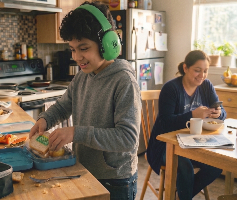
- After. [Name] wants to choose their own lunch. Within 6 months, [Name] will make a sandwich and pack lunch for school on 4 of 5 school days, with no reminders.
The first is a fine hope, and it fits the plan's Vision for the Future section, where long-term hopes go. Only the second can be checked, because it names the skill, the count and the date.
DDS's guide tests every goal with SMARTIE: specific, measurable, achievable, relevant, timebound, inclusive and equitable. Two of those letters keep the person at the center. Relevant means a goal "should always reflect what is important to the individual," even one about health or safety. Inclusive means the person drove the conversation, with help as needed. No sample can do that part for you.
DDS calls the last question the action plan, and wants it to show who does what. Its FAQ asks for "the roles and responsibilities of members of the planning team."
For "What is currently happening?", our daily living skills checklist helps. A family marks 42 everyday skills as done alone, with help or not yet. Here is the lunch goal, from Supports at Home, with all five questions answered:
| DDS question | Sample answer |
|---|---|
| What is the desired outcome? | [Name] wants to choose their own lunch. Within 6 months, [Name] will make a sandwich and pack lunch for school on 4 of 5 school days, with no reminders. |
| What is currently happening? | A parent packs lunch every morning. [Name] can spread peanut butter, then stops and waits to be told the next step. |
| What is important to [Name]? | Choosing what goes in the lunch. Packing it with nobody watching. |
| What is important for [Name]? | Eating a full lunch at school. Using the knife safely. |
| What needs to be done? | The adaptive skills training provider teaches the lunch steps at home and reports progress before the next review. A parent keeps the lunch food on one shelf and checks the bag at the door. The service coordinator names the provider on the signature form. |
That "currently happening" answer is a pattern we meet in home after home, at every age. Someone can do each step, stops after one, and waits to be told the next. Closing that gap takes teaching at home, the same way every time, for months.
The last row carries over to the plan's signature form. That form lists each service with its provider, start date, how much and how often. When the "Supported By" box says "provider to be determined," that teaching lands on a parent.
We can be the name in that box, with no waitlist. A caring professional would come teach the skill: a master's-level clinician with 9.3 years of experience on average. They'd be matched to the person because they've already helped others learn that same skill. The family pays $0 through the Regional Center. A few taps show whether adaptive skills training fits, or send the link to a family with a goal like this.
The worry that stops more families than any other: will this cost us IHSS or respite hours? Respite is the Regional Center's paid break for caregivers. Adding adaptive skills training won't lower either one. For IHSS, the state put it in writing: when counties set the hours, they leave out what the Regional Center pays for.
Questions coordinators and parents ask
Can I copy these goals word for word?
As a start, yes. Then swap in the person's own wants, places, people and numbers, so the goal fits one person and nobody else.
How many goals should an IPP have?
There's no set number. The state requires at least one life area in every plan. The person, or a minor's parent, picks which areas go in and in what order.
How long should an IPP goal take?
Six months to a year suits most goals. The state's IPP guide asks for a review every year, even in a two- or three-year plan.
Where does progress on last year's goals go?
Under "What is currently happening?" in the same life area. The state's IPP guide puts it there, so the new goal starts from where things stand now.
Does each Regional Center service need its own life area?
No. A service needs the life area that fits the goal it serves, and that area has to be in the plan. Two services can share one area.
Will adaptive skills training lower our IHSS or respite hours?
No. Adding it leaves both IHSS and respite alone. The state wrote a rule for counties. They must skip Regional Center services when they add up IHSS hours. Read the rule.
What's the difference between "important to" and "important for"?
"Important to" is what the person cares about, like a favorite routine or a pet. "Important for" is what keeps them healthy and safe. Every life area asks both, and the goal should reflect what's important to the person.
When does every IPP switch to the new format?
By the end of 2027, the state says. Every new plan has used it since January 1, 2025. A family on a two- or three-year plan can ask to switch sooner, and the Regional Center "must accommodate the request."