This daily living skills checklist covers 42 everyday skills for people with autism or another developmental disability, age 3 and up. Mark each skill alone, with help or not yet, and you'll see where help would make daily life easier.
"Alone" means they start and finish with nobody reminding them. "With help" means they need a word, a point or a hand for any step. "Not yet" means they can't do it yet.
In each area, the simpler skills come first. There's no score, and it isn't a test.
Getting dressed
- Takes off shoes, socks and a jacket.
- Puts on pants and a pull-over shirt.
- Puts on shoes and fastens them.
- Does buttons, snaps and zippers.
- Picks clothes that suit the weather.
- Gets dressed from start to finish.
Eating and cooking
- Drinks from an open cup.
- Eats with a spoon and a fork.
- Spreads and cuts with a table knife.
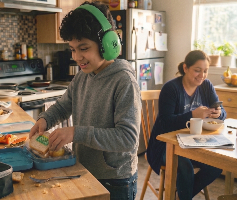
- Makes cereal or a sandwich.
- Heats food in the microwave.
- Cooks a simple meal on the stove.
Toilet and hygiene
- Washes and dries hands.
- Uses the toilet, wipes and flushes.
- Brushes every tooth, top and bottom.
- Bathes or showers and washes hair.
- Uses deodorant every day.
- Handles shaving or a period, if needed.
Around the house
- Puts things back where they go.
- Puts dirty clothes in the hamper.
- Sets and clears the table.
- Makes their bed.
- Washes dishes or loads the dishwasher.
- Washes, dries and folds laundry.
Staying safe
- Stays close in a store or parking lot.
- Asks you before opening the front door.
- Gives their name and your number.
- Stops at the curb and looks both ways.
- Asks a store worker for help if lost.
- Takes medicine the right way, on time.
Money
- Names coins and bills.
- Pays at a register and gets change.
- Counts out enough money to pay.
- Saves up for something they want.
- Uses a debit card safely.
- Pays a bill on time.
Getting around
- Buckles their own seat belt.
- Knows the way to a nearby place.
- Orders food at a counter.
- Finds a place with a map on a phone.
- Rides the bus or a ride-share.
- Gets to school or work on time.
Print the daily living skills checklist
The printable daily living skills checklist fits all 42 skills on one page, with three boxes beside each. It prints fine in black and white. Write the date at the top, and every copy becomes a record of where things stood.

Download the daily living skills checklist (PDF). Print a fresh copy before each planning meeting and keep the old ones.
How to use the checklist
Use the checklist in three steps. Mark a normal week. Circle the one or two skills that cost your family the most. Then bring the page to your next planning meeting.
1. Mark a normal week
Mark what happened last week, on ordinary days. Skip the best day and the worst one. If you're torn between two boxes, pick the one with more help in it.
Count every reminder as help. After a while, reminders stop feeling like help at all.
If you still call "shampoo?" through the bathroom door, the shower gets a "with help" mark. So do shoes that only go on after the third "shoes."
2. Circle the one or two that cost the most
Circle the one or two "with help" skills that cost your family the most each day. Look for the skill that makes every morning late, or the one that means someone has to stay home.
Leave the rest for later. Nobody learns twelve skills at once, so twelve circles is the same as none.
3. Bring it to your Regional Center planning meeting
Bring the page to your child's next IPP meeting, the planning meeting with your Regional Center. The IPP (Individual Program Plan) lists the services the Regional Center pays for. Regional Centers are California's state-funded agencies for people with developmental disabilities, including autism.
Point to your circles and ask for adaptive skills training, the service that teaches everyday skills at home.
Moving a circled skill to "alone" takes weeks of small steps, every time the skill comes up. If it's getting dressed, that means every morning, right when everyone has somewhere to be.
Weeks of mornings like that is a lot to teach through. The skills you circled decide who we'd send: a caring professional who has already helped others with those same skills. Our professionals hold master's degrees, with 9.3 years of experience on average. Through your Regional Center, your family pays $0. See whether adaptive skills training fits what you circled.
You can ask before the meeting, too. Email your service coordinator, your contact at the Regional Center, and copy us:
To: [your service coordinator's email]
CC: team@aldera.org
Hi [their first name],
I'd like to add Aldera (formerly Levi Life Skills) for adaptive skills training to [your child's full name]'s service plan.
Thank you.
No email address for them? Search your inbox for your Regional Center's name, or for @nlacrc.org, @westsiderc.org or @elarc.org. If your child isn't a Regional Center client yet, the eligibility check shows the first step.
Many parents never ask, because they're afraid adaptive skills training will eat into their IHSS or respite. That's among the biggest misconceptions we run into: adding it won't lower either one.
IHSS (In-Home Supportive Services) is the county's paid in-home care program. The county has to figure your hours with Regional Center help left out, and the state wrote that rule down. Respite, the Regional Center's paid breaks for families, won't drop when the new service starts.
Changing the checklist for your child
Every age uses the same checklist. What changes is how far down each area you mark.
- Ages 3 to 5. Mark the first two or three skills in each area and leave the rest blank. Start with a skill that comes up every day, like washing hands or taking off shoes.
- Ages 6 to 12. Mark down each area until you reach skills your child hasn't tried yet. Do it on a school day, because a slow Saturday can make getting dressed look easier than it is.
- Teens. Give your teen a copy to mark, mark one yourself, then compare. Money and getting around matter more now, because they lead to a first job and time with friends.
- Adults. Mark every row, because the bottom ones carry the most weight now: cooking, laundry, medicine, bills and the bus. Adaptive skills training has no upper age limit.
A few situations change what counts as "alone," at any age.
- If your child doesn't talk. Count the skill however they do it. Showing an ID card or a phone screen with their name counts as giving their name.
- If they use tools. Alone still counts with their own tools. Velcro shoes, a shower chair, a phone alarm for medicine and a picture list on the mirror all count.
- If home and school differ. Mark home. A school report can call a skill independent when it still takes reminders at home, because school runs on its own routine.
- If two adults disagree. Each of you marks a copy. Where your marks differ, the skill depends on who's in the room, and that's worth teaching too.
Questions parents actually ask
What are daily living skills?
Daily living skills are the everyday jobs of looking after yourself and your home. They include dressing, eating, the bathroom, chores, staying safe, money and getting around. They're the hands-on side of adaptive skills, and our guide to what adaptive skills are explains the bigger term.
Is this the same as a daily living skills assessment?
No. A formal assessment, like the Vineland, is scored by a trained evaluator who compares your child with others the same age. This checklist has no score. It's for deciding what to teach first.
My child can do it but won't. What do I mark?
With help. If it happens only after a reminder or with you in the room, it isn't alone yet. We hear "they can, they just won't" all the time, and it often means getting started is the hard part.
Will adaptive skills training lower our IHSS or respite hours?
No. It doesn't trim a single IHSS or respite hour. When the county works out IHSS, your Regional Center services aren't part of the math. See the rule.
Is there a daily living skills checklist for adults?
Yes, this one. The bottom rows of each area are adult skills, and an adult can mark their own copy. Compare it with yours before their next planning meeting.
How often should I fill it out?
Before each Regional Center planning meeting, and whenever a skill seems to click. Keep the old copies, because the day a "with help" turns into "alone" deserves to be on paper.