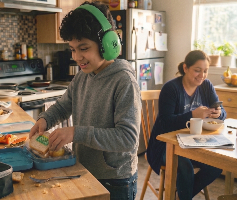
Helping an autistic picky eater takes small, calm steps. Make the table feel safe, then change food so slowly it barely feels new. Expect weeks for each new food, and months before the list really grows. Step 1 can start at your next meal. Put one food your child almost always eats on the plate, next to whatever everyone else is having.
Why autistic picky eating is usually about the senses
Because for a lot of autistic people, a new food is a gamble for the senses. A texture, a smell, a color or even the sound of a crunch can feel like too much. One lump in the yogurt can set off a gag.
A safe food comes out the same every time. Same crunch, same color, same brand from the same box. A new food is a guess. For many autistic kids and adults, guessing at the table feels like a risk.
A review of 17 studies found that autistic children were about five times as likely as other kids to have feeding problems. In another study, autistic children who were more sensitive in the mouth refused more foods and ate fewer vegetables.
From across the table, all of this looks like stubbornness. Up close, it's usually a gag that starts before the fork arrives. Or a smell that fills the room, or a food that changed since last time. Pushing adds fear on top of that. So the steps below start by making the table safe.
Before you start
Write down every food your child eats now, exactly the way they eat it. Note the brand, the shape and how it's cut. "Chicken nuggets" isn't specific enough if your child eats only the dinosaur ones from one store.
That's your safe list, and every step below builds on it. You'll also want a small side plate and a sheet of paper for the fridge. All of this happens at meals you already have, with no extra sessions to run.
Your child is ready when they're growing well and eat enough of their safe foods to fill up. A calm stretch helps, too. The week of a move or a new school is a hard week to start.
How to help an autistic picky eater, step by step
Six steps, in the order you start them. The first three make meals feel safe. The last three bring in new foods. The steps work at any age, and each one says what changes for a teen or adult.
Put a safe food on every plate
A safe food is one your child eats almost every time it's served. Put one on the plate at every meal, enough to fill up on, next to whatever the family is eating.
Now your child knows every meal has something they can eat. A new food nearby feels a lot less scary when it isn't the only choice. A teen or adult can pick their own safe food and serve it themselves.
Take the pressure off the table
Pressure is anything that turns eating into a test. "Just one bite." "Two more and you can have dessert." Counting bites out loud. Watching the plate.
One of the biggest misconceptions parents have is that a child will eat even less if no one pushes. In one study, preschoolers ate more when no one asked them to finish, and complained far less about the food.
So talk about anything but the food. If you do mention it, describe it: cold, crunchy, sweet. If your family has dessert, serve it no matter what got eaten. With a teen or adult, pressure often sounds like worry ("You can't live on crackers"). Save that talk for the doctor's office.
Run every meal the same way
A meal that goes the same way every time leaves your child one new thing to handle: the food. Pick a short routine and keep it at every meal. Wash hands, help set the table, sit in the same seat, eat, then carry the plate to the sink.
Keep the same plate and cup if those matter to your child. Give the meal a clear end, like a timer or the moment the family is done. That keeps it from turning into a standoff. A teen or adult can help write the routine and take a bigger job in it, like serving everyone.
Step 3 asks the most of you. It has to happen at every meal, the same way, from every adult who feeds your child, for weeks. One grandparent's "just try it" can undo a good week.
One more adult at the table can keep a good week from coming undone. Ours is a caring professional with a master's degree and 9.3 years of experience on average. They're matched to your child because they've already taught people to sit through family meals and serve themselves. It's $0 through your Regional Center, the California agency that serves autistic people. Tell us what's hardest at meals to see if adaptive skills training fits.
Start each new food from a safe one
The easiest new food is almost a safe food. Change one thing at a time: the brand, the shape, the color, the flavor or the texture. When the new version feels boring, change one more thing.
Plain pasta can become a new pasta shape, then pasta with butter, then butter and a little cheese. Fries from one place can become fries from another, then oven fries, then potato wedges. If your child pushes a new version away, the step was too big, so make it smaller.
A teen or adult should choose the goal. Maybe it's a food friends eat at lunch, or a dish at a favorite restaurant. Work toward it one small change at a time.
Let looking, touching and smelling count
A bite comes last. Smaller steps come before it, and each one counts. First the new food sits on the table, then near your child's plate. Then your child touches it, smells it, licks it, and maybe bites it and spits it out.
Give your child a napkin or a small bowl for spitting a bite out. Knowing there's a way out makes a taste less scary. Cooking counts too. Washing carrots, stirring a sauce or sprinkling cheese gets a food into their hands with no one asking them to eat it.
Teens and adults can do this part on their own. They can cook the new food, smell it, and taste it later, away from an audience.
Track progress by the week
Keep a short list on the fridge with one line for each new food. Write the steps across each line. Sat near it. Touched it. Smelled it. Licked it. Tasted it. Ate it.
Measured this way, a week that went from "won't sit near it" to "touched it" is a real win. Measured in bites, the same week looks like nothing happened, and that's when a lot of families give up.
Expect weeks for each food. Some foods never make it, and that's fine. Drop that one and pick another that's closer to a safe food. A teen or adult can keep the list on their phone.
If it stalls
Most stalls come from a step that's too big, or from a meal that went differently. These four come up most.
- The new food can't stay on the table. Move it farther away, to the middle of the table or the kitchen counter, and leave it there for a week. Being in the same room with it is a step.
- Weeks pass and nothing moves. The step is too big. Go back one step, from tasting to smelling, or make the change to the food smaller.
- Another adult keeps pushing. Give them one job at meals: eat with your child and talk about anything else. Point them to the routine on the fridge.
- A safe food drops off the list. It often happens after an illness, a hard week, or a new recipe or package. Go back to the exact version your child ate, and pause new foods until things settle. If the list keeps shrinking, tell the pediatrician.
When to get help
Get help when the food list is shrinking, the scale is dropping, or months of steady steps haven't moved a single food. Which help you need depends on what's hard.
If the hard part is the food itself, start with the pediatrician and ask about a feeding evaluation.
If the hard part is the meal around the food, that's a set of skills, and skills can be taught at home. Those include staying at the table, using a fork, serving themselves and helping make a meal. The Regional Center's name for that help is adaptive skills training. Your service coordinator, the person at your Regional Center who plans your child's services, is who to ask.
Questions parents actually ask
Will my child grow out of being a picky eater?
Partly. One study followed 18 autistic kids from about age 7 to 13. They refused fewer foods as teens, but they still ate about 18 different foods, no more than before.
Should I cook a separate meal for my autistic child?
Usually not. Serve the family meal with one or two of your child's safe foods added, so there's always something to fill up on. If the safe list is very short, the safe food may be most of the plate for now, and that's fine.
Is it OK to hide vegetables in their food?
We'd skip it. If a safe food suddenly tastes or looks different, your child may stop trusting it, and the list gets one food shorter. Make changes in the open, one small step at a time.
Is there a name for picky eating that's more than picky?
Yes. Doctors may call it ARFID (avoidant/restrictive food intake disorder) when eating is limited enough to hurt growth, health or daily life. Only a doctor or a feeding team can say whether it fits.
What if the picky eater is my autistic teen or adult?
The steps are the same, with one change: they choose. Let them pick the food to work toward and the reason, like a lunch out with friends. Cooking it themselves counts as touching and smelling it.
Can adaptive skills training help a picky eater?
With the meal around the food, yes. Adaptive skills training teaches everyday skills at home, and at meals that means things like using a fork and serving themselves. It isn't feeding therapy, so a short or shrinking food list goes to the pediatrician first.
Is picky eating a sign of autism?
Not on its own. Lots of young kids go through picky stages. Feeding problems are much more common in autistic kids, though, so if you've noticed other differences, tell the pediatrician.